Why This Piece Is Special
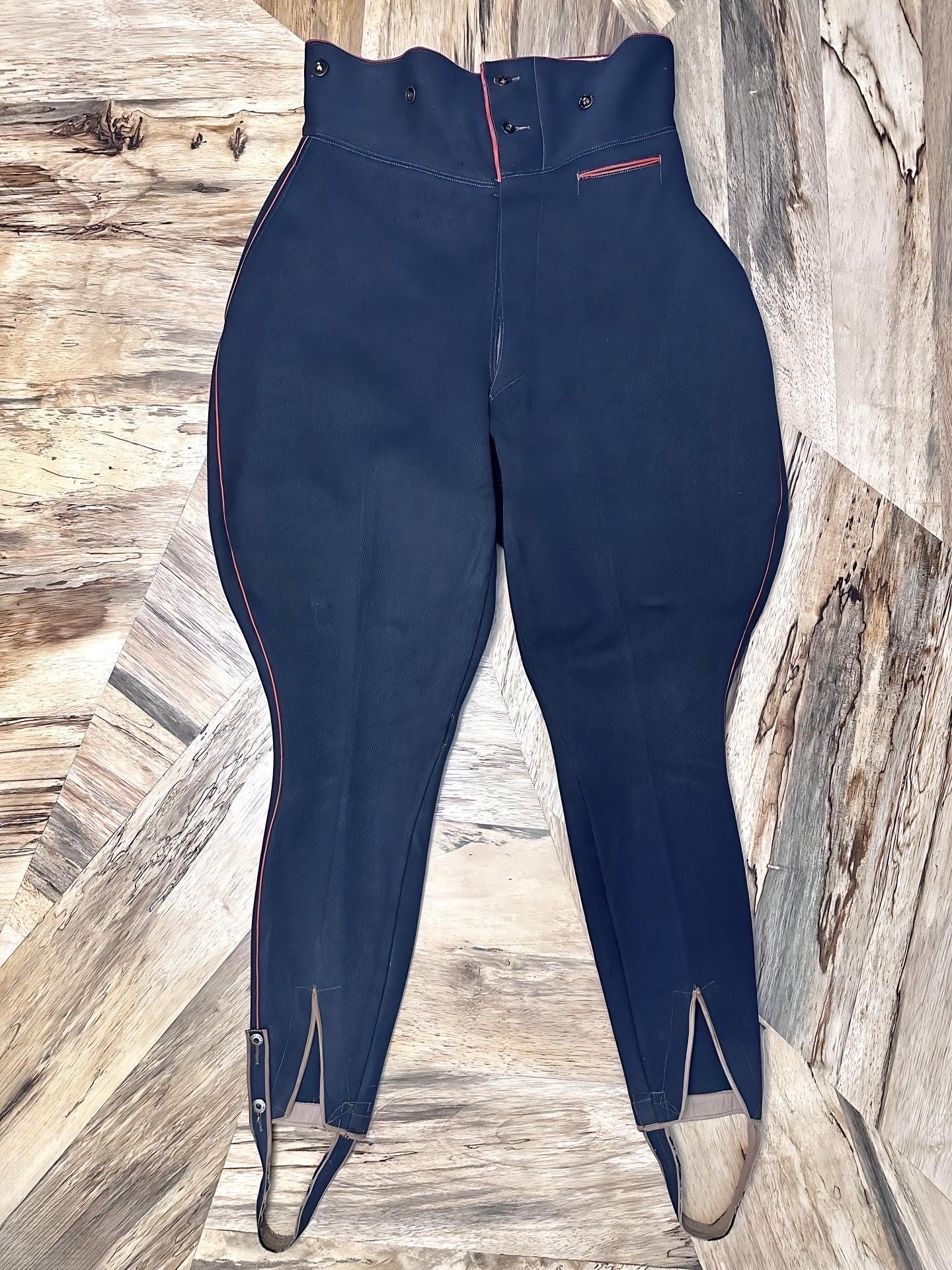
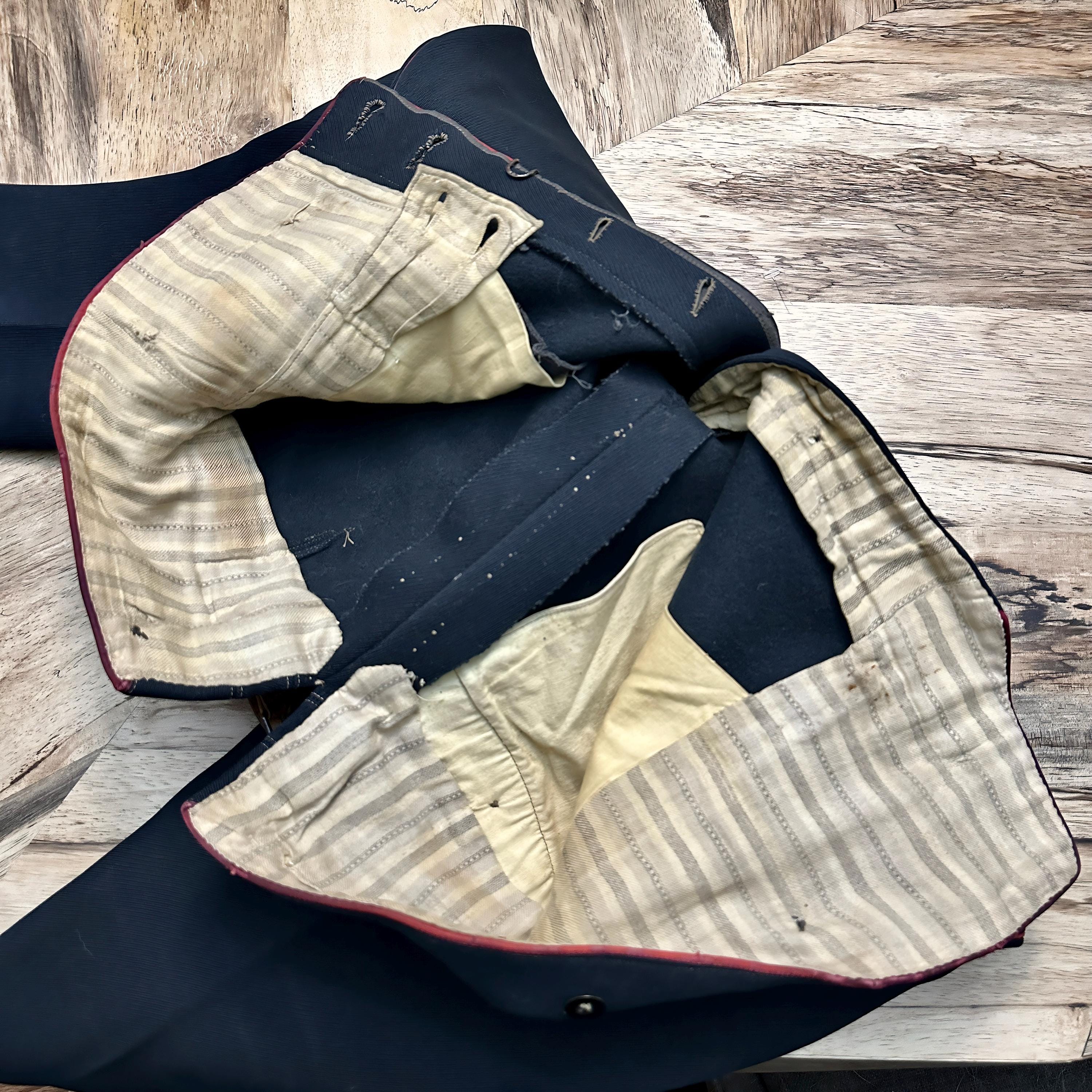
This is a rare, wearable example of early 20th-century equestrian tailoring, produced by CH. HERMANN of Tiflis (present-day Tbilisi) during the Imperial Russian era. Garments from this region and period seldom survive in wearable condition, and even fewer retain their original construction details, maker-stamped hardware, and distinctive riding silhouette.
A highly collectible and wearable pair of antique equestrian riding breeches (jodhpurs), tailored by CH. HERMANN of Tiflis (now Tbilisi, Georgia), a major cultural and military center of the Russian Empire prior to 1917.
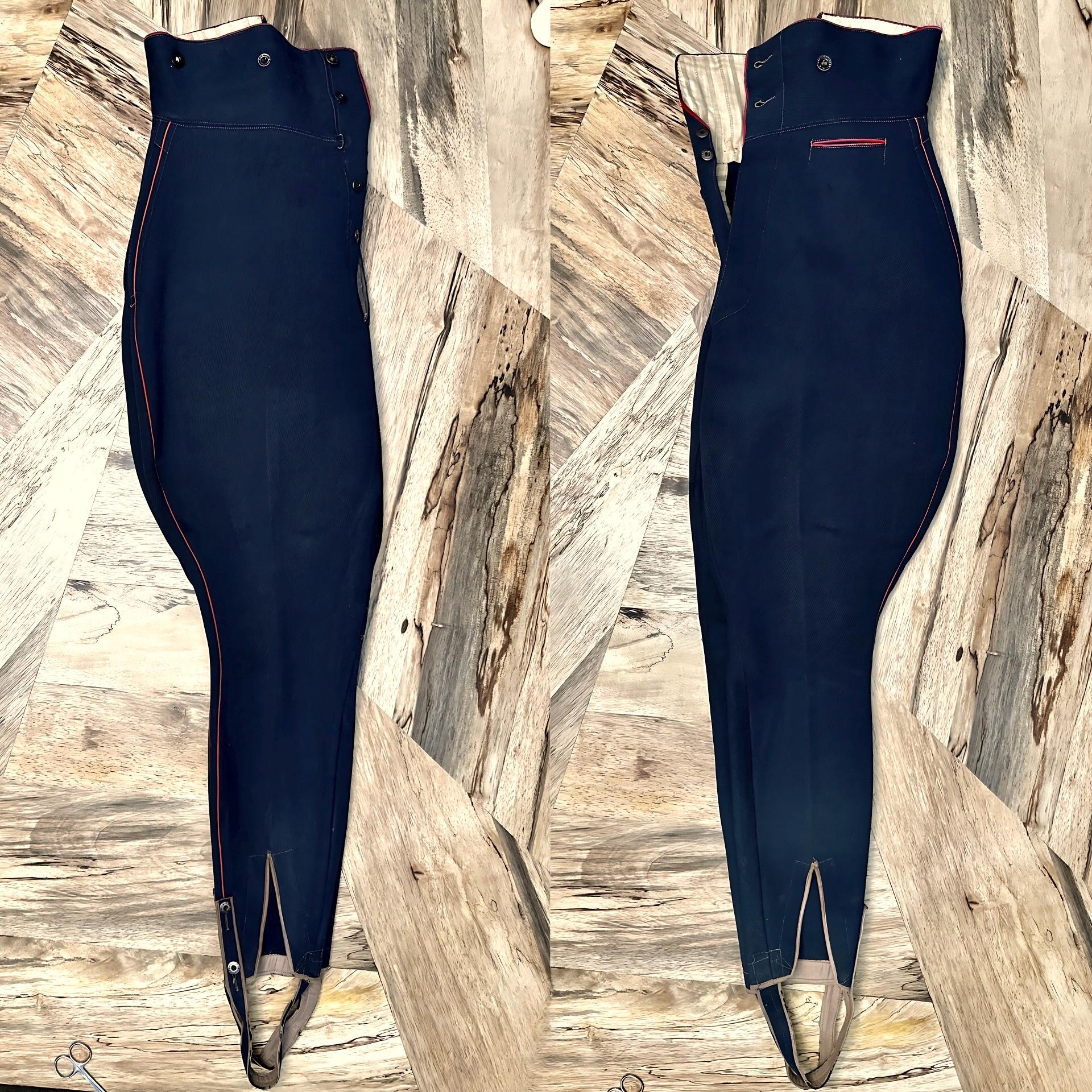
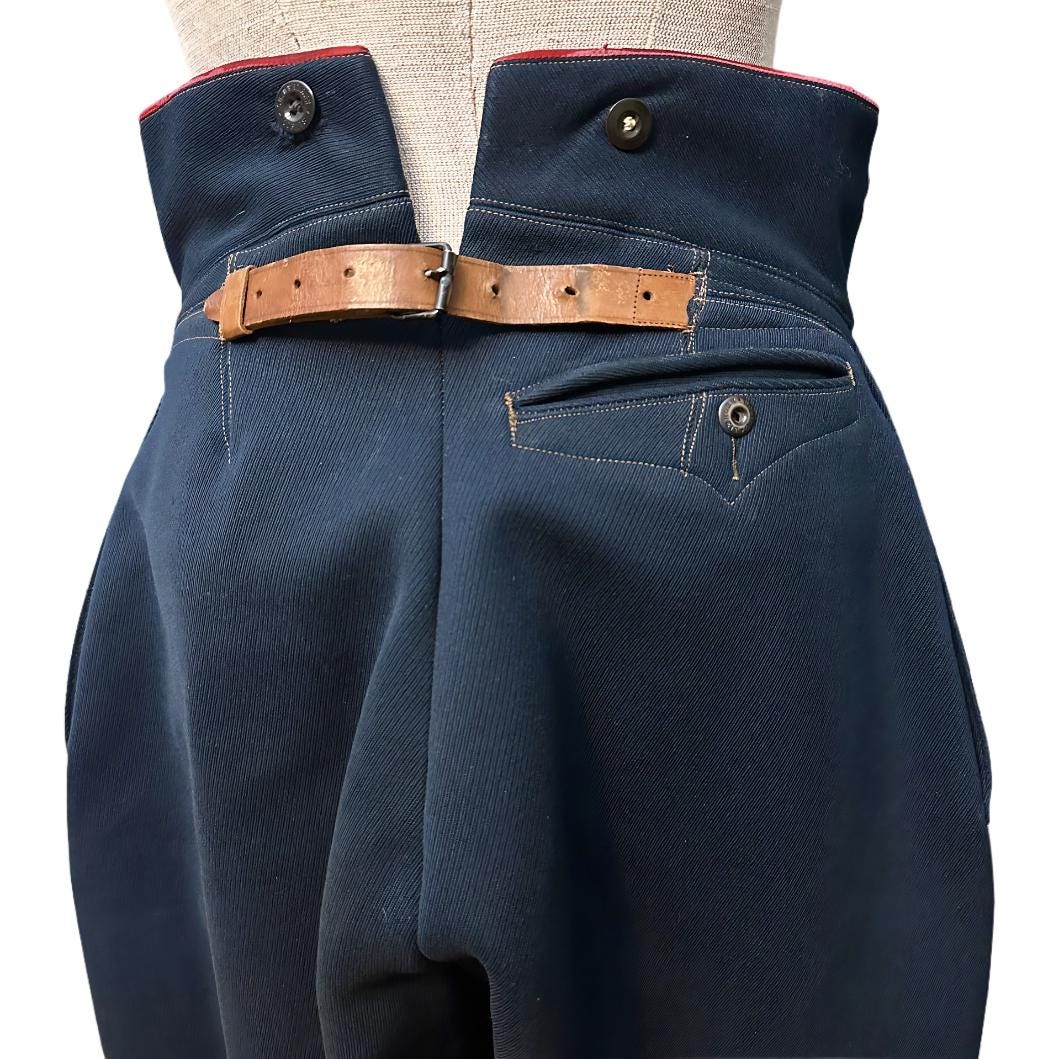
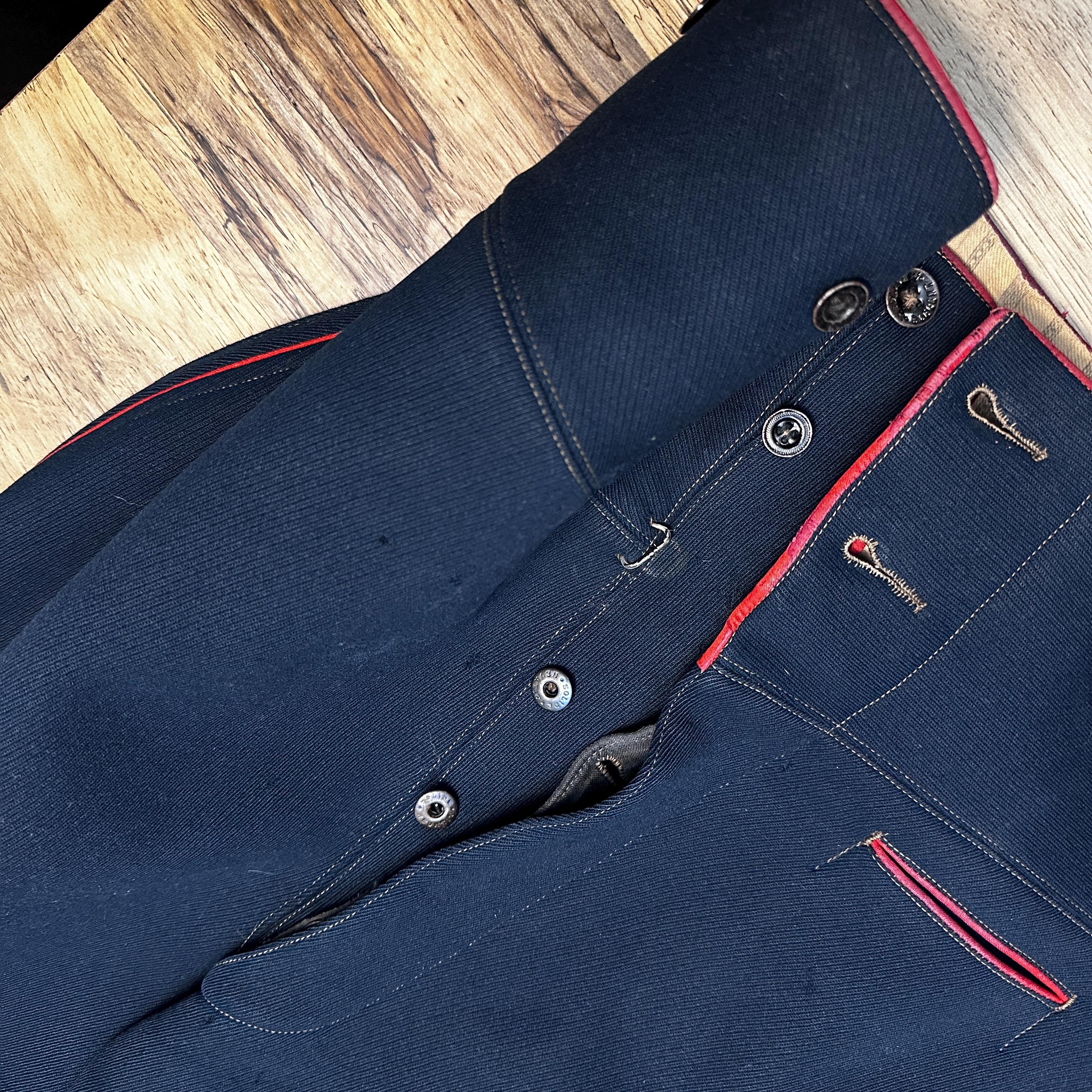
These breeches exemplify the classic high-waisted, flared-hip, sharply tapered leg silhouette designed for mounted riding and formal equestrian use. The dramatic proportions, red piping, and reinforced tailoring are hallmarks of cavalry and officer-grade garments of the period.
Construction & Details
* Dense twill fabric consistent with cavalry and equestrian wear of the era
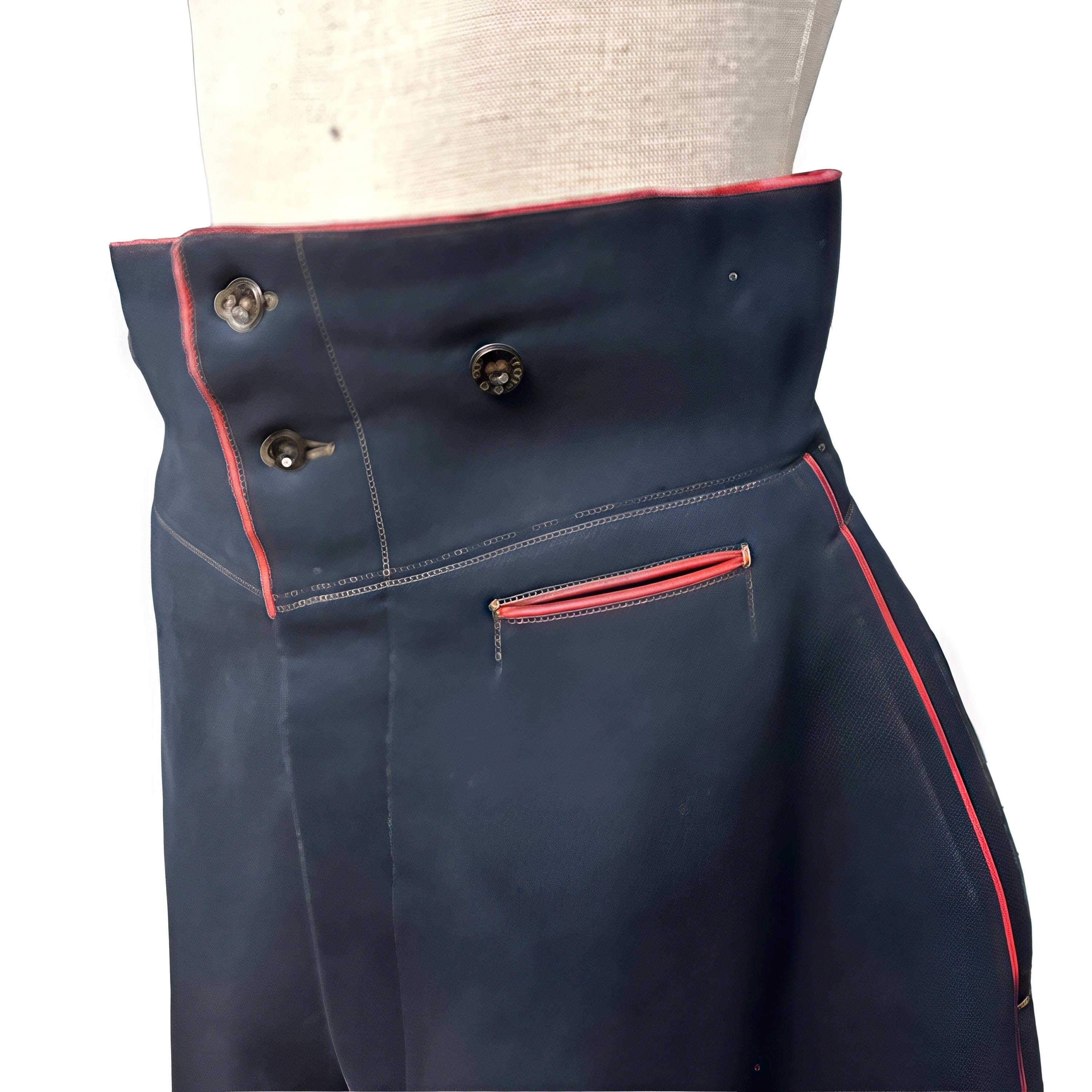
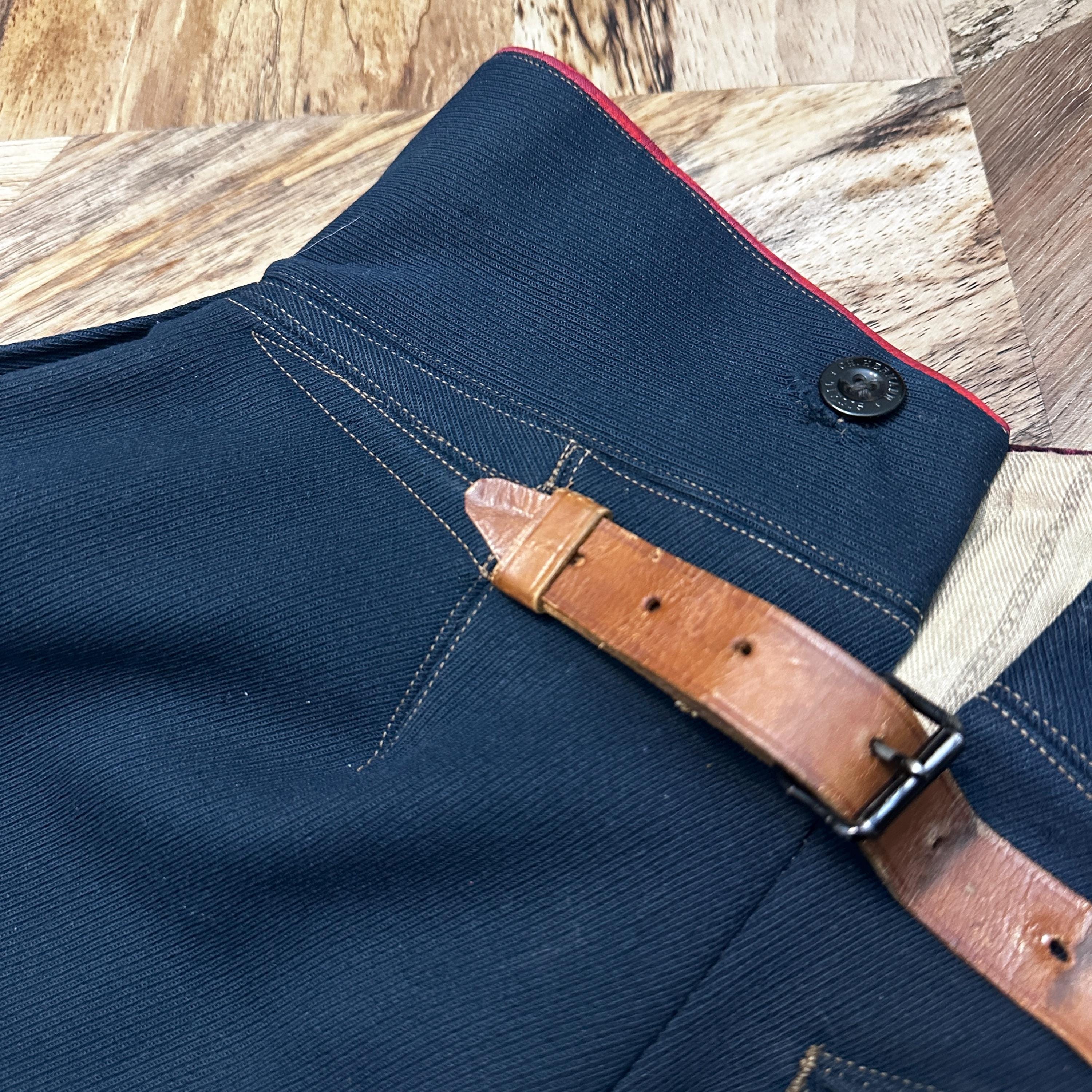
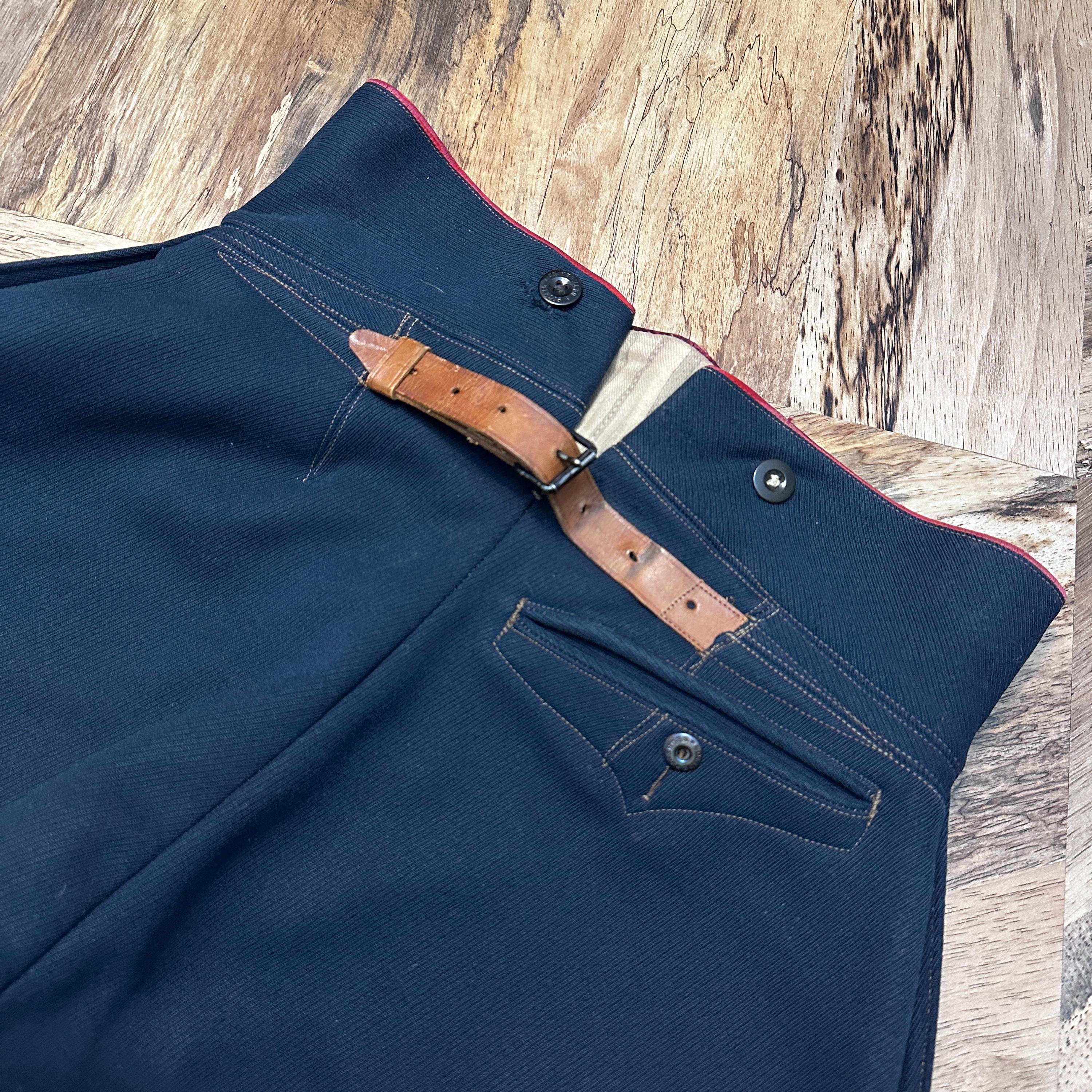
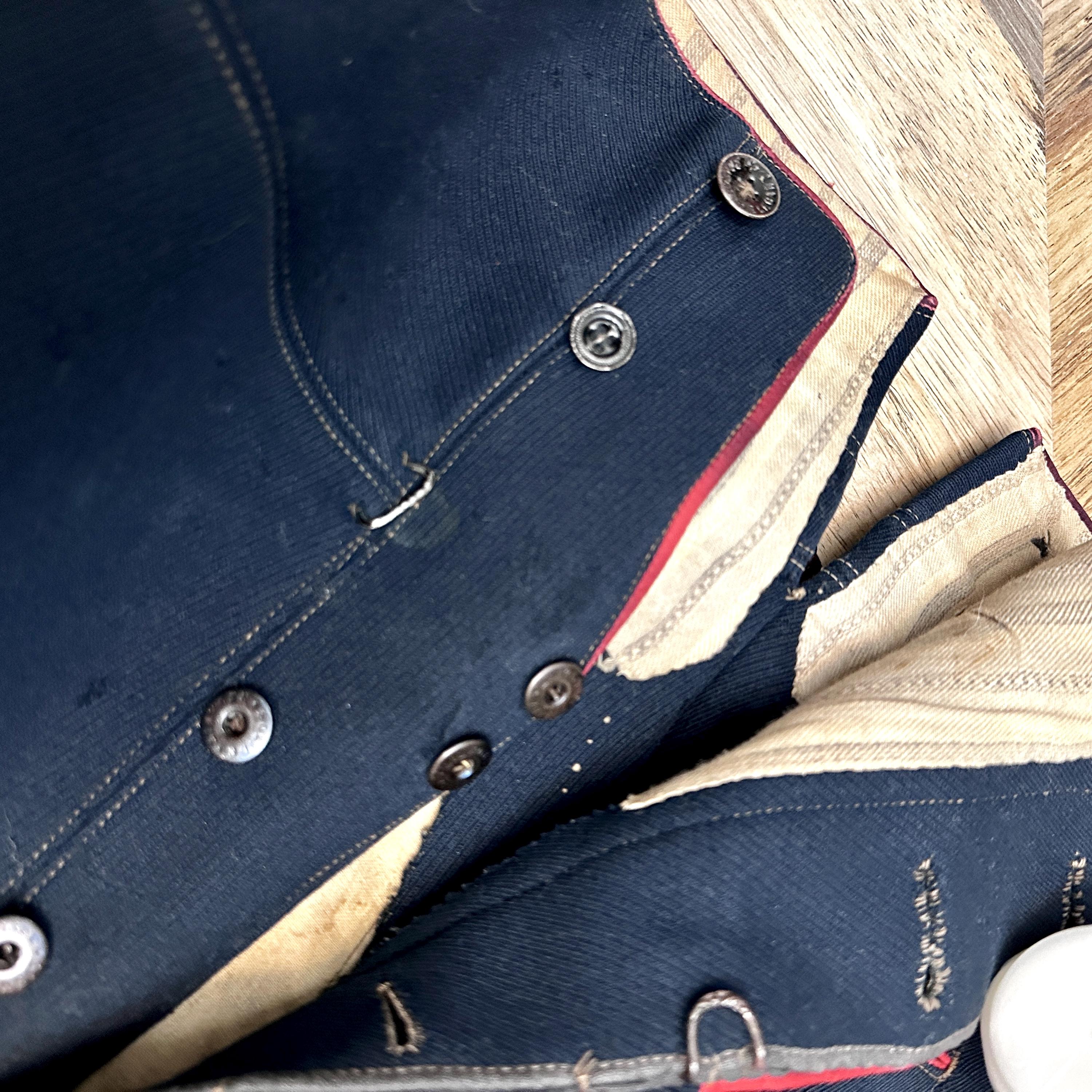
* High-rise waist with multi-button closure
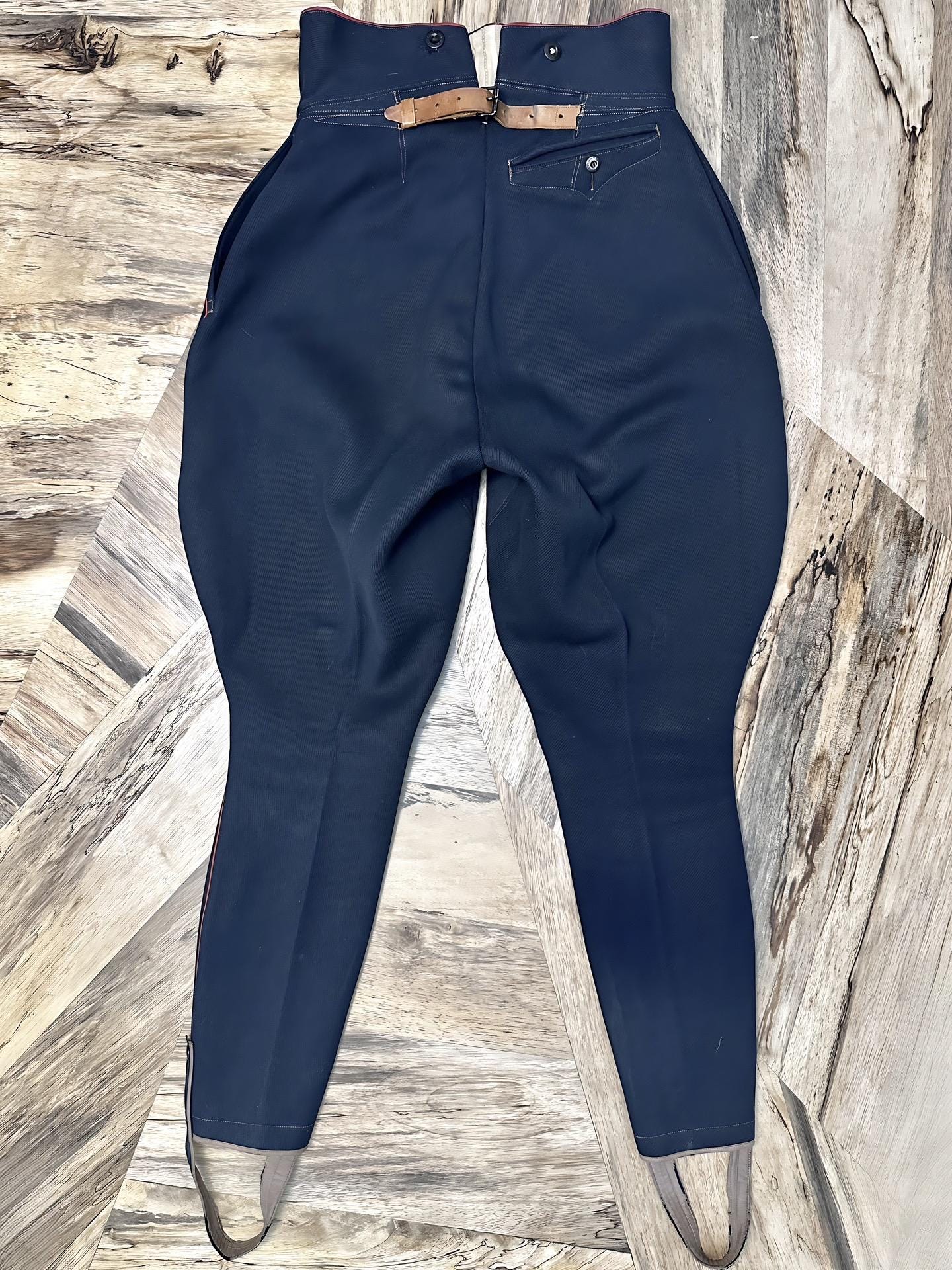
* Flared hips and thighs for saddle movement
* Sharp taper below the knee with original stirrup straps
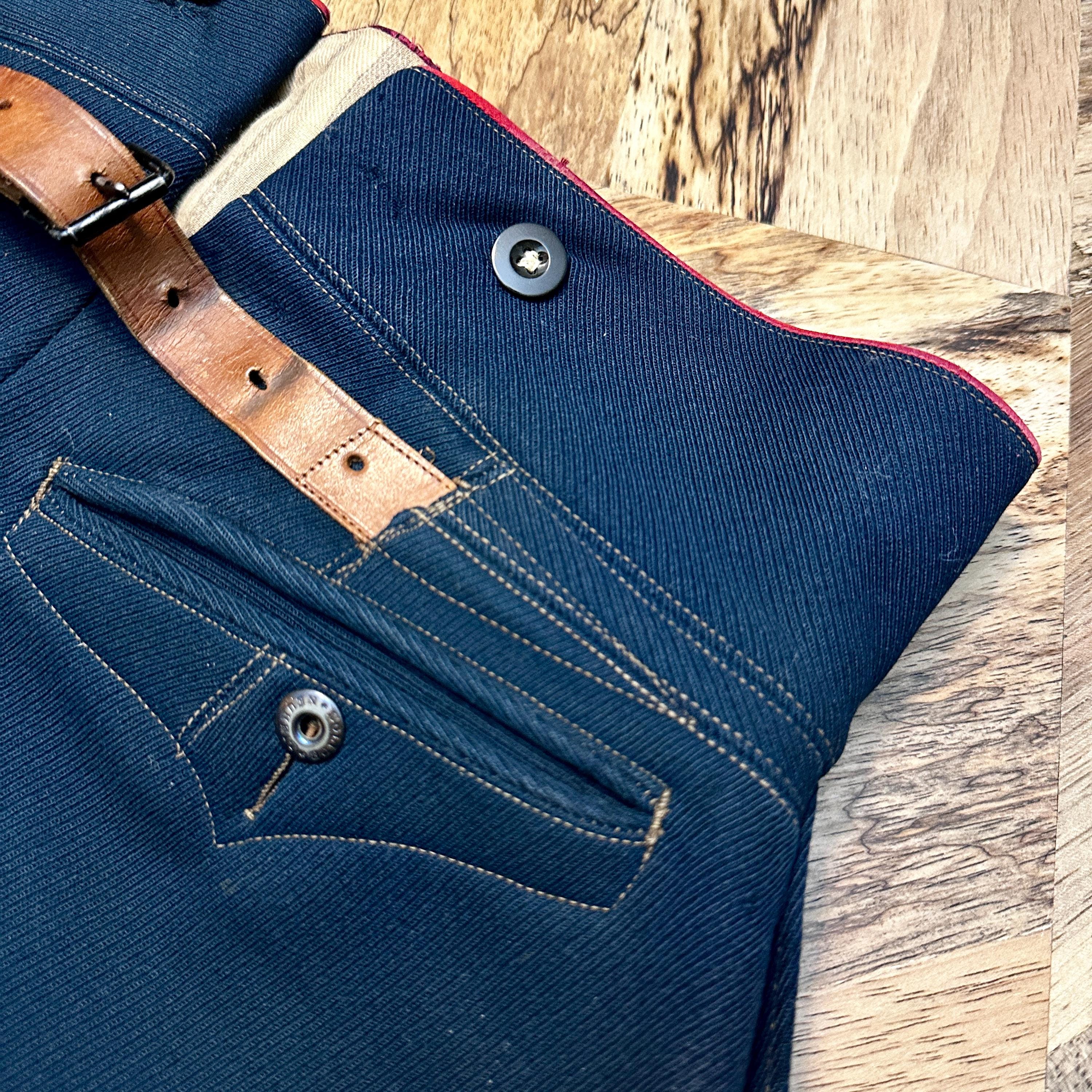
* Red piping along outer seams and pocket welts
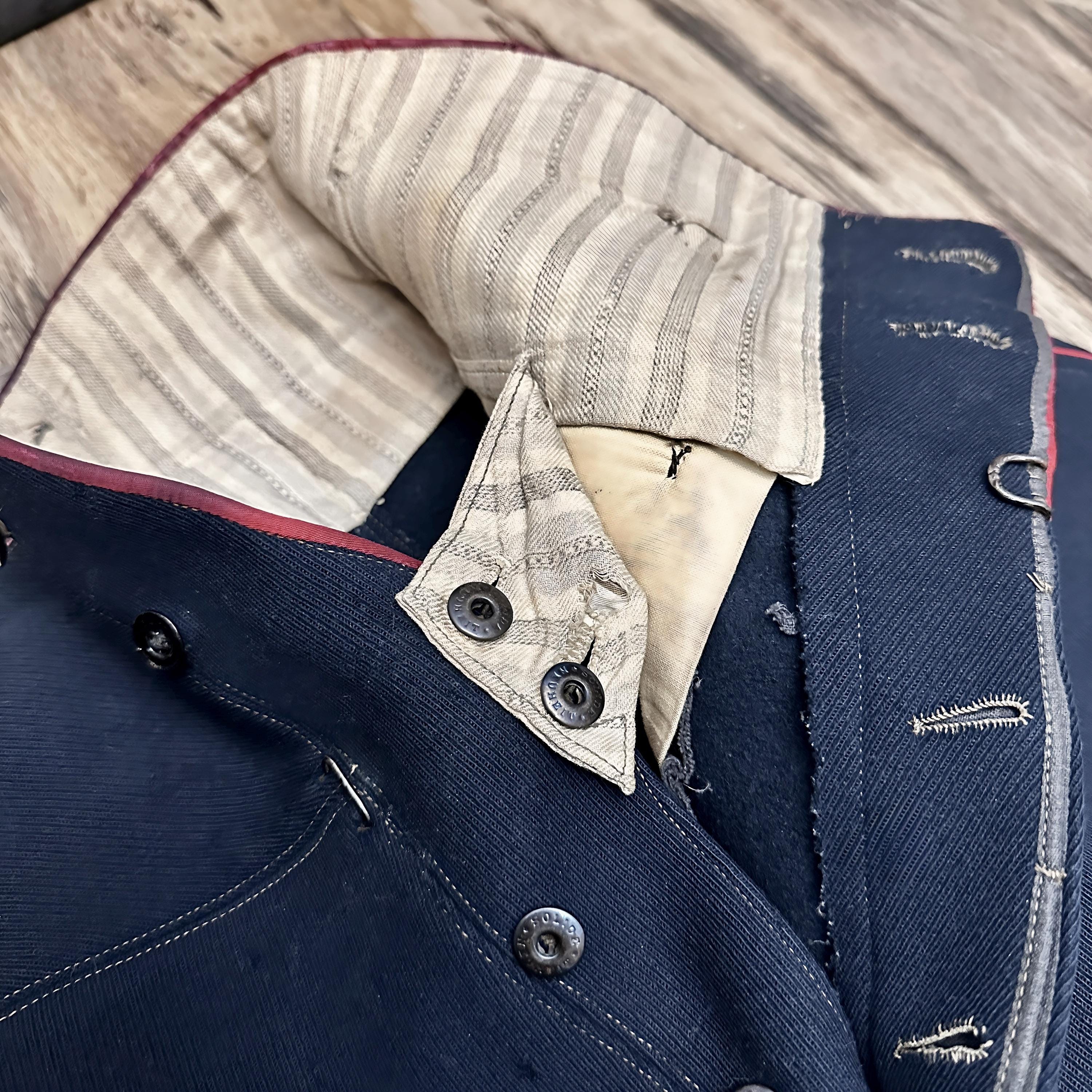
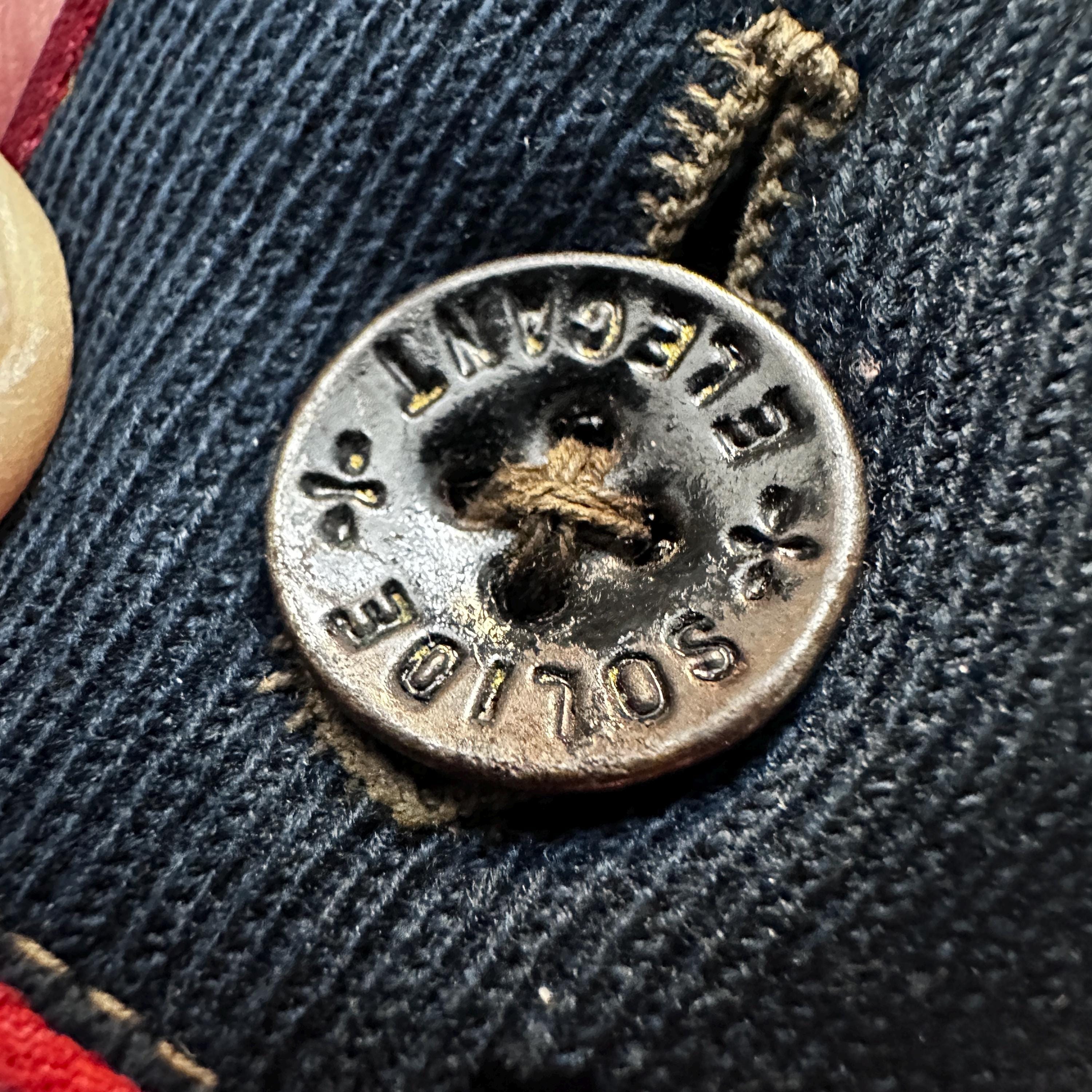
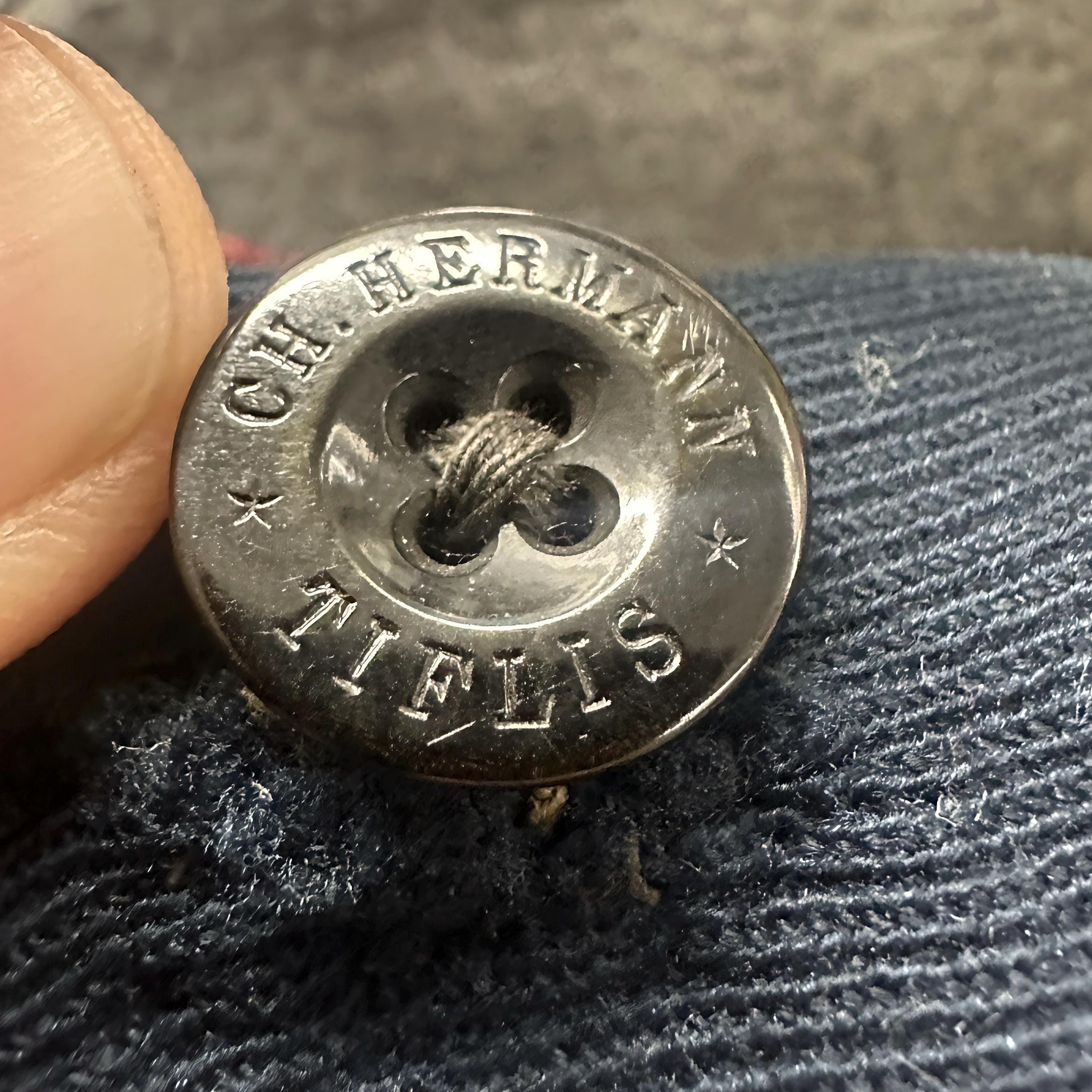
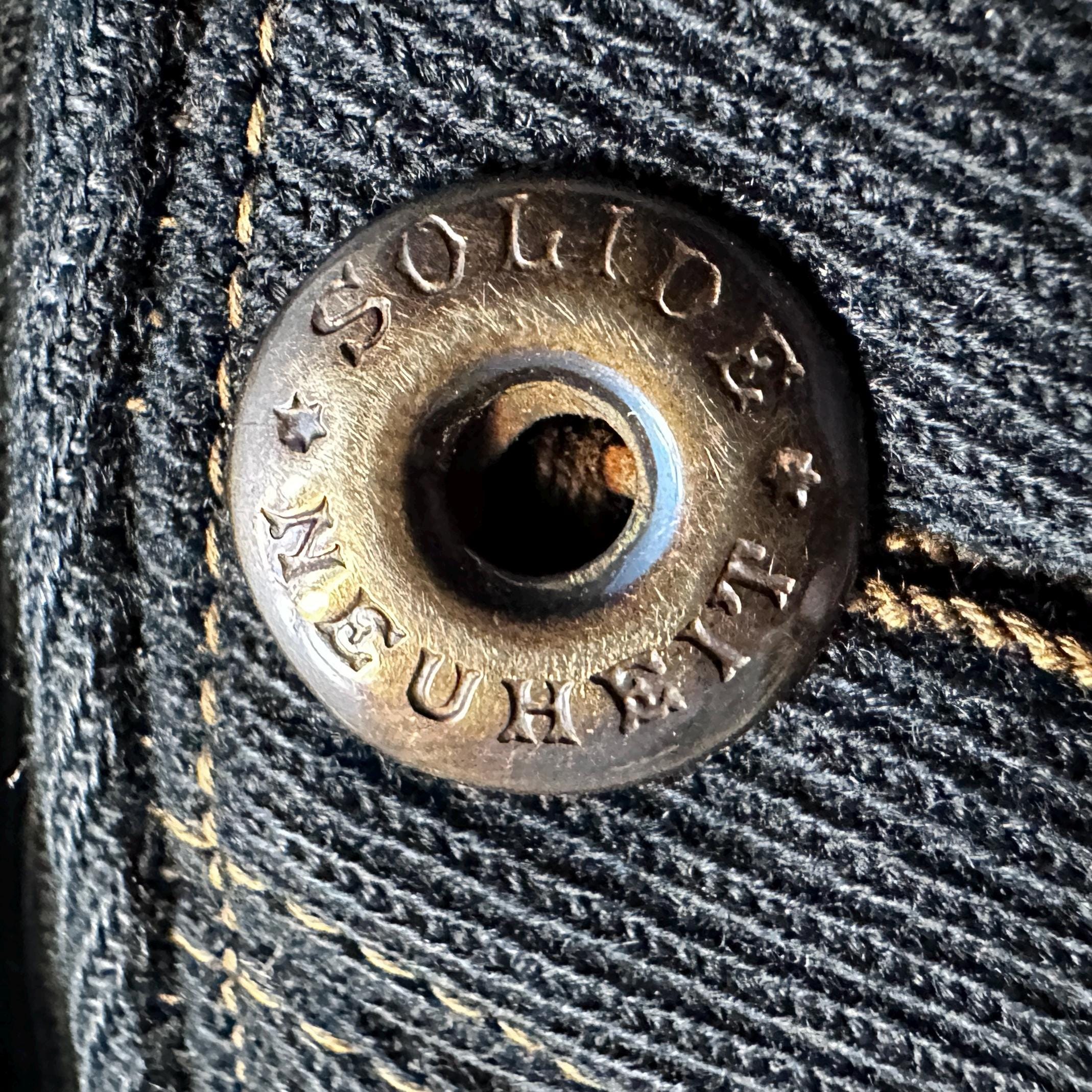
* Original metal buttons stamped “CH. HERMANN TIFLIS” and “SOLIDOS”
* Interior striped cotton pocketing and waistband lining
* Back leather adjustment belt (martingale style)
Measurements (Flat, Approximate)
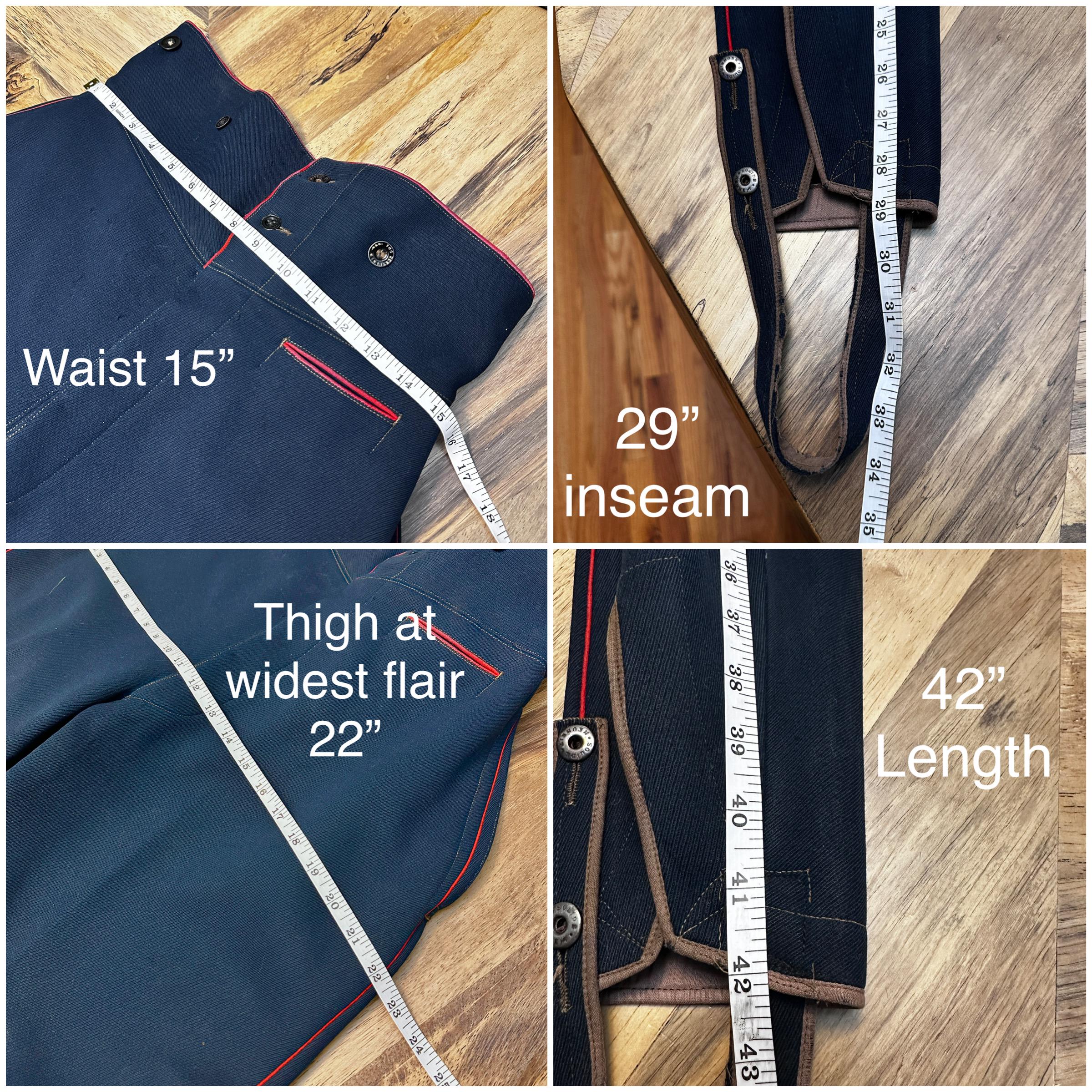
* Waist: 15" (≈ 30")
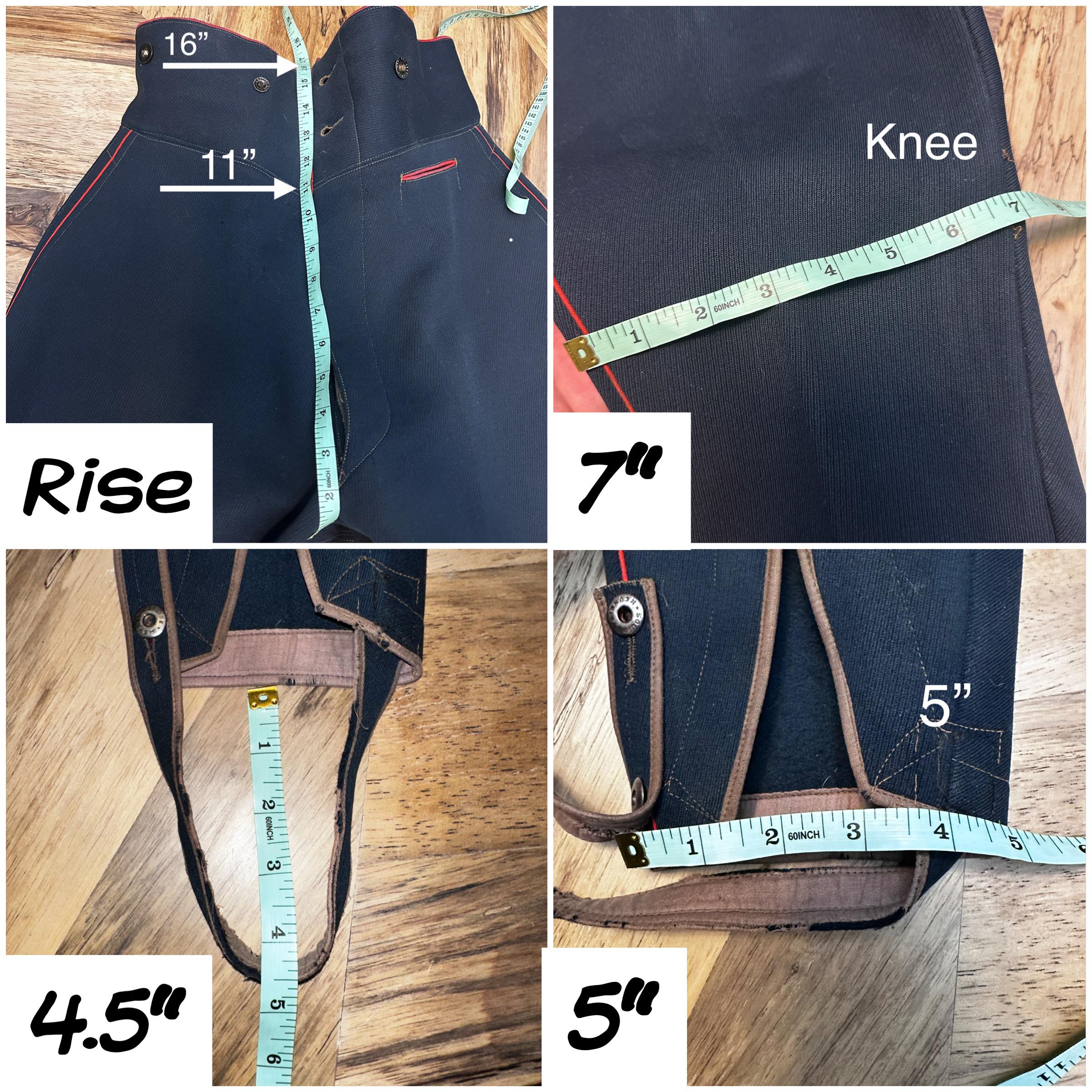
* Front Rise: ~16"
* Thigh (widest point): ~22"
* Knee: ~7"
* Ankle Opening: ~5"
* Inseam: ~29”
* Under-Foot Stirrup Length: 4.5”
* Total Length: ~42"
Please compare measurements carefully. Antique garments do not conform to modern sizing standards.
Condition & Preservation Notes
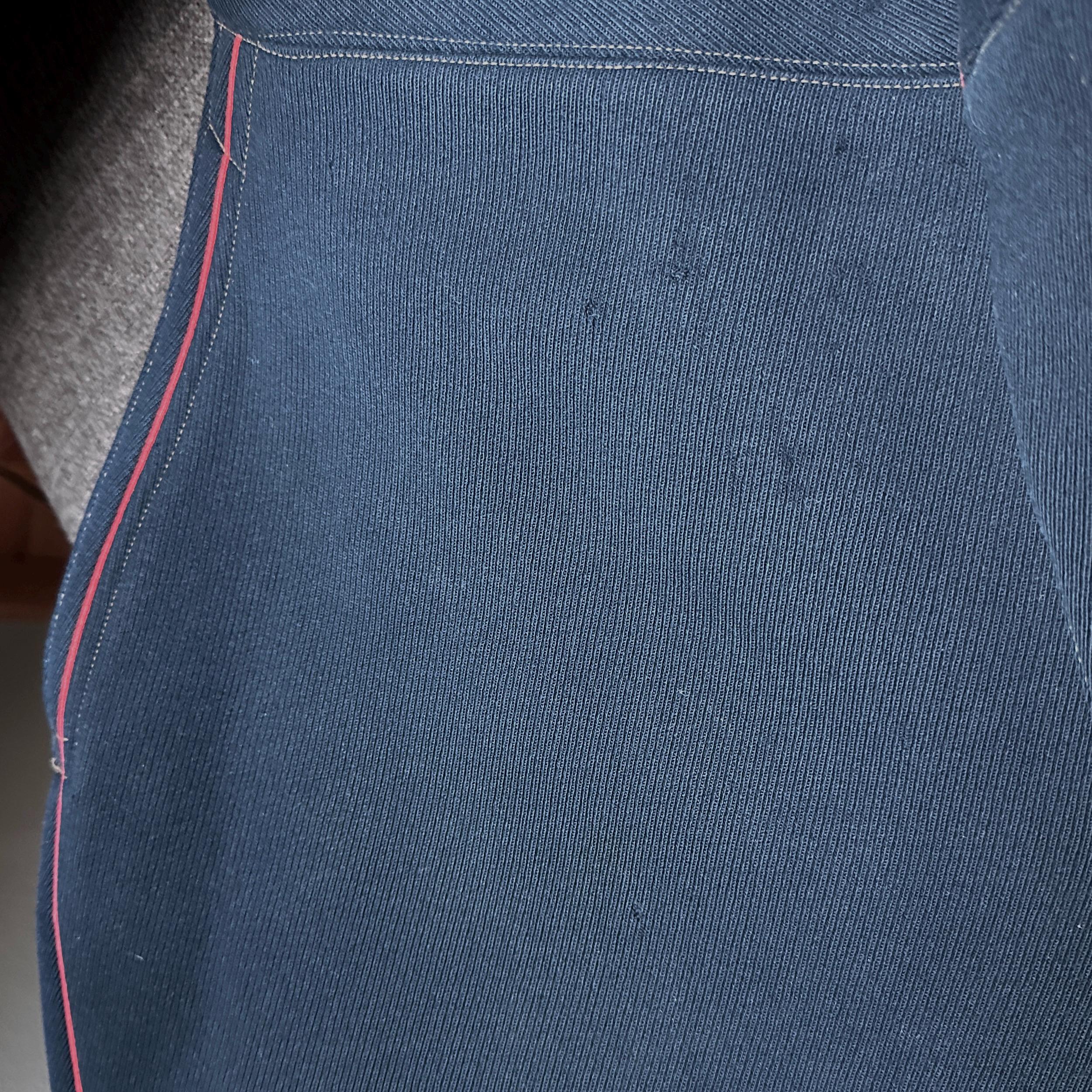
Wearable and structurally stable overall. Fabric remains strong with no shattering, dry rot, or active tearing. The right thigh shows a small localized area of surface abrasion and approximately four pinhole-sized “nibbles,” limited to the surface only and not penetrating through the fabric (see photos).
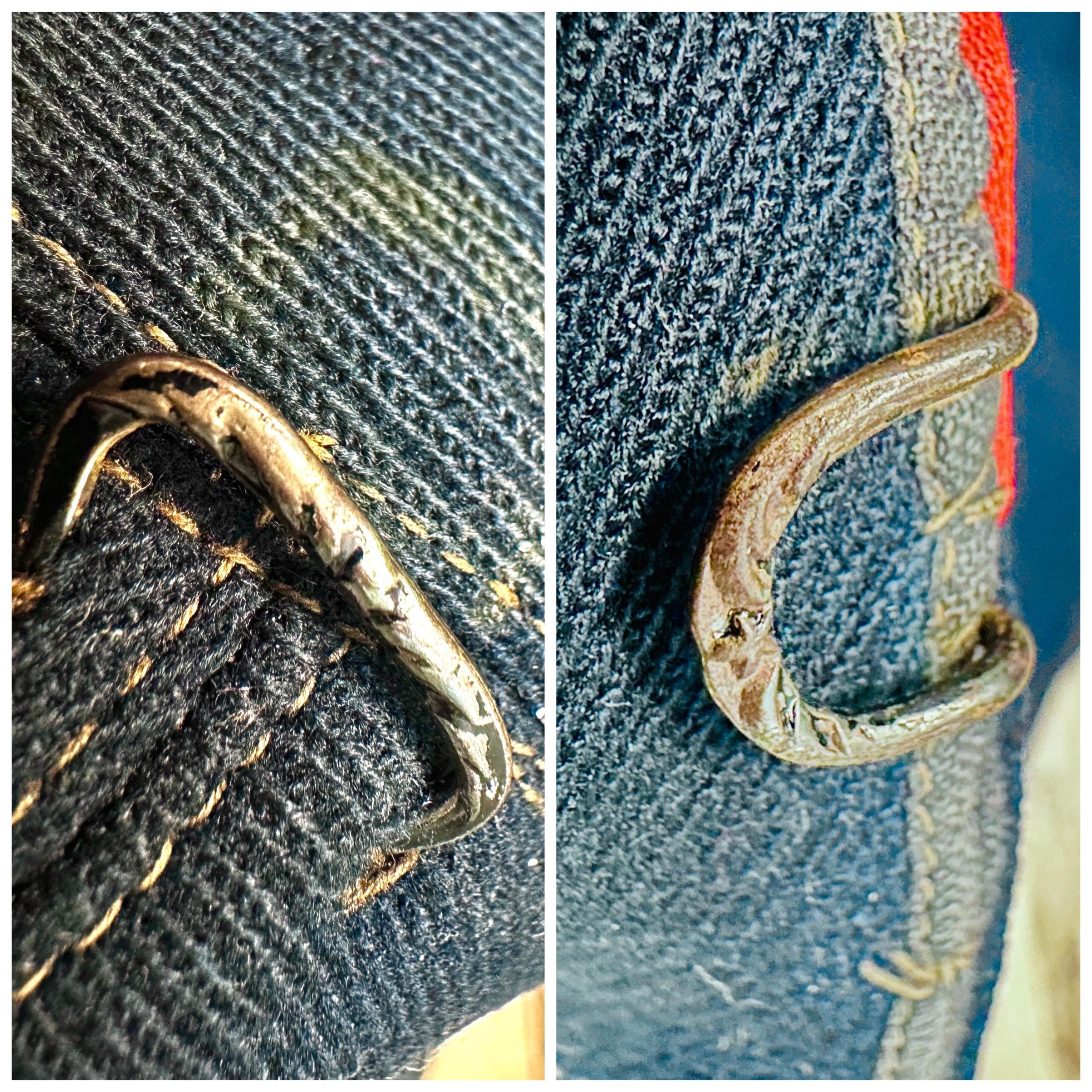
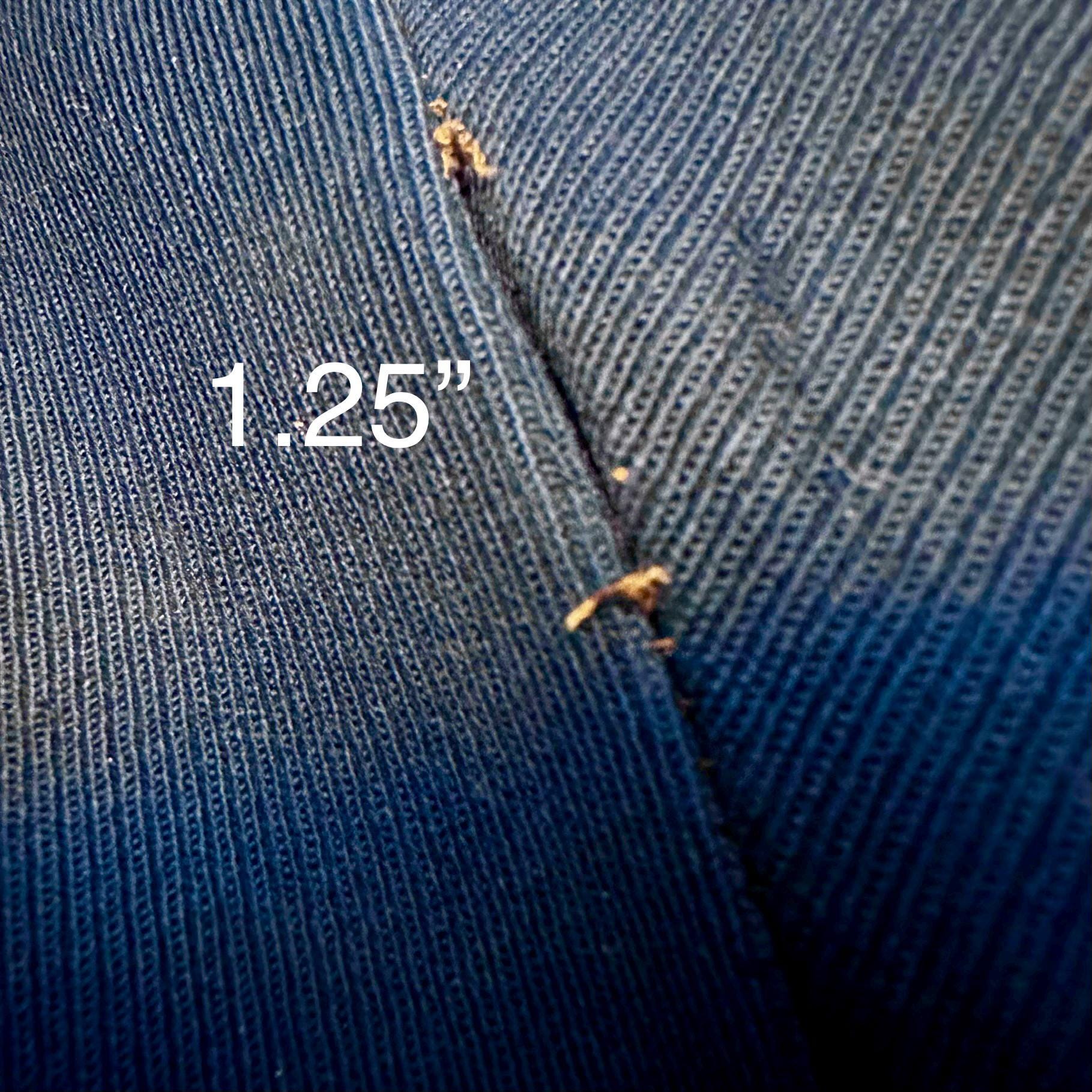
Stitching is intact throughout with the exception of a small seam opening at one knee stress point, consistent with age and historical riding use. One waistband button is missing along the high-waist closure line; all remaining buttons, hooks, and closures are present and functional.
Honest signs of age and use are present, as expected for an antique Imperial-era equestrian garment, with no issues affecting overall wearability or display.
Notes for Wear & Collecting
Suitable for careful modern wear, historical riding, archival fashion, reenactment, or collection. Any stabilization or restoration should be performed by a professional experienced with antique garments.